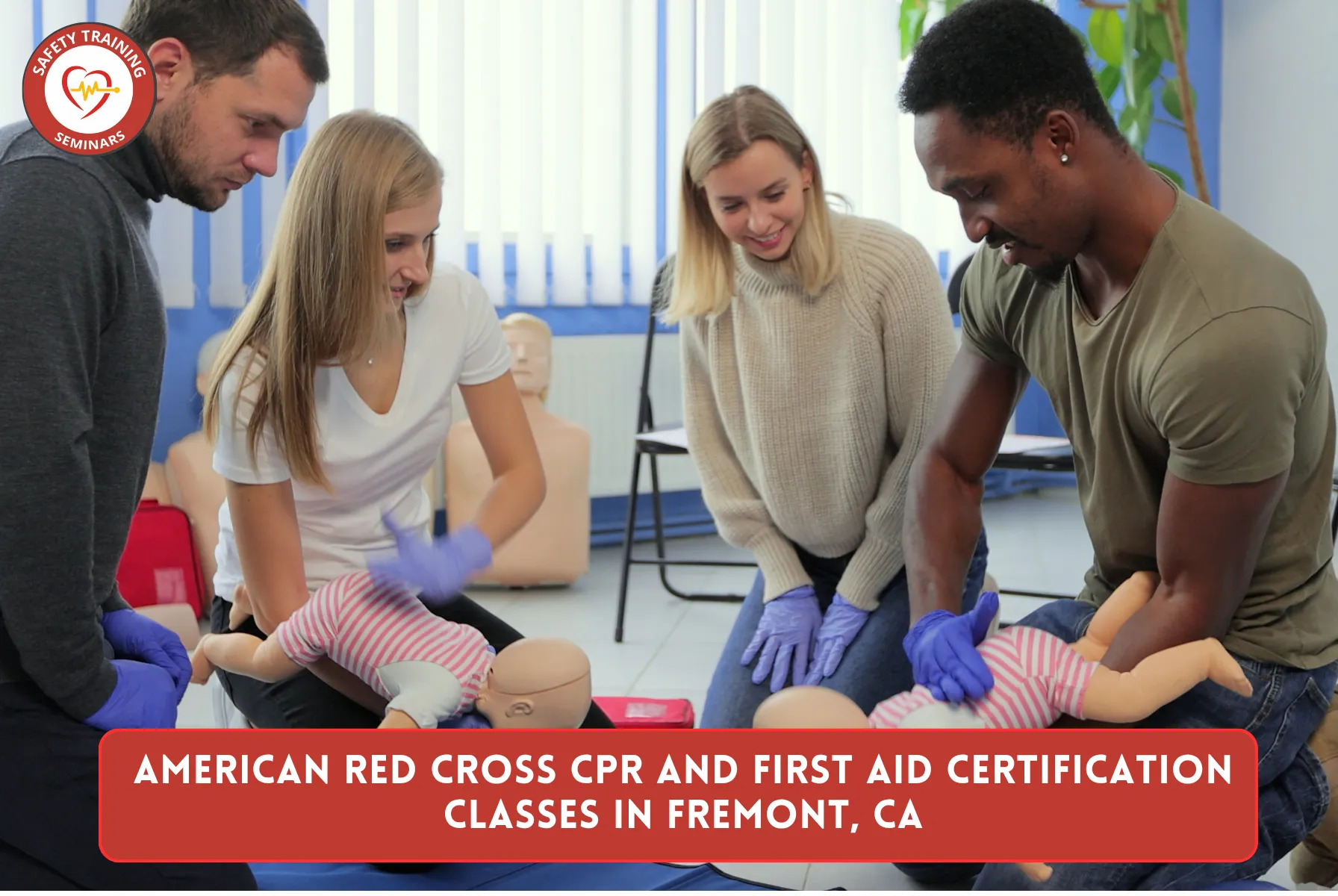
Attending your first CPR class can feel intimidating, especially if your job, clinical program, or licensing board requires official credentialing on a tight deadline. First-time students in Fremont often wonder how physically demanding the practice will be, what equipment they will use, and whether a written exam is involved.
Knowing what happens from the moment you step into the classroom helps ease uncertainty. CPR courses combine practical skills practice on feedback manikins with clear video instruction and practical scenarios. Depending on your occupation—whether you work in patient care at Washington Hospital, manage a daycare in the Warm Springs district, or coach youth sports—the depth of training varies to meet your specific workplace guidelines.
Key Takeaway: First-time CPR students complete hands-on physical skills practice using manikins, automated external trainer units, and ventilation barriers. Healthcare workers take a BLS CPR Certification Course covering pulse checks, two-rescuer dynamics, and a written test, while non-clinical workers typically take general CPR and First Aid. Official certification cards are issued digitally upon passing the class.
Identifying the Right CPR Course for Your Needs
Before attending a class, verifying your exact course requirement prevents enrolling in the wrong session. Educational institutions and employers across the East Bay classify CPR courses into two distinct paths.
| Feature | Basic Life Support (BLS) | Heartsaver CPR / First Aid |
| Primary Audience | Nurses, Physicians, EMTs, Dental Teams, Allied Health Students | Teachers, Childcare Providers, Personal Trainers, Construction Staff |
| Primary Focus | High-performance CPR, pulse checks, bag-valve-masks, team rescue | Single-rescuer CPR, AED usage, choking relief, basic first aid |
| Patient Scope | Adult, Child, and Infant resuscitation protocols | Adult, Child, and Infant (optional modules per course) |
| Assessment Method | Practical physical skills test + written exam | Practical physical skills test |
| Typical Validity | 2 Years | 2 Years |
Healthcare Providers and Students
If you are enrolled in a nursing school or work in a direct patient-care facility, you almost certainly need Basic Life Support. This course focuses on rapid assessment, clinical team communication, advanced airway support, and rapid defibrillation.
Community Members and Workplace Teams
If your employer requires CPR compliance for Cal/OSHA or California EMSA child-care regulations, a general CPR and First Aid class covers essential emergency care without complex clinical team dynamics.
Step-by-Step Breakdown of a Standard Class Session
Knowing the schedule of events helps first-time attendees prepare mentally and physically for their instruction.
| Training Phase | Practical Hands-On Activity |
| 1. Registration & Check-in | Arrival, material distribution, and station setup |
| 2. Concept Overview | Video-assisted instruction on cardiac arrest |
| 3. High-Quality Compressions | Floor practice on adult, child, and infant models |
| 4. Airway & Ventilation | Pocket mask and bag-valve-mask seal techniques |
| 5. Automated Defibrillation | Pad placement and clear safety procedures |
| 6. Team Resuscitation & Testing | Combined scenario practice and skill evaluation |
1. Hands-On Chest Compressions
You spend a significant portion of the class practicing compressions on adult, child, and infant manikins. Instructors teach you how to position your shoulders directly over your hands, lock your elbows, and use your upper body weight to push down at least 2 inches on adult manikins. Manikins equipped with real-time feedback devices signal when you achieve the correct depth and rate of 100 to 120 compressions per minute.
2. Airway Management and Ventilation
Proper ventilation requires learning how to open an airway using the head-tilt/chin-lift maneuver or jaw thrust. Students practice forming a tight seal around disposable barrier masks and operating bag-valve-mask (BVM) devices to deliver rescue breaths that make the manikin’s chest visibly rise.
3. Operating an AED
Automated External Defibrillators are straightforward devices designed to guide rescuers through audible prompts. In class, you practice attaching trainer pads to a manikin’s bare chest, standing clear during rhythm analysis, and delivering a shock when prompted before immediately resuming compressions.
4. Special Scenarios and Choking Relief
Classes also cover how to help conscious and unconscious choking victims of all ages. You practice performing abdominal thrusts on adult and child trainers, along with back slaps and chest thrusts on infant manikins.
Physical Preparation and What to Bring
A CPR class requires active movement, including bending, kneeling on the floor, and using arm strength to deliver compressions. Taking a few simple steps beforehand ensures a comfortable experience.
- Wear Comfortable Attire: Choose flexible clothing such as scrubs, athletic wear, or casual pants. Avoid short skirts, low-cut tops, or restrictive tight jeans.
- Bring Required Documents: If you enrolled in a hybrid or blended-learning course, print or save the completion certificate from your online cognitive module.
- Tie Back Long Hair: Pulling long hair back keeps it out of your face while leaning over manikins during skill evaluations.
- Arrive early: Aim to arrive 10 to 15 minutes before your scheduled start time. Instructors close doors promptly to maintain mandatory instruction hours.
Local Training Access with Safety Training Seminars in Fremont
For residents, students, and healthcare professionals based in southern Alameda County, finding a local class with reliable scheduling makes earning your credential straightforward.
Safety Training Seminars Fremont CPR Training Center is located at 42808 Christy St, Ste. 104, Fremont, CA 94538. Situated near the Pacific Commons shopping area and convenient to Interstate 880 and Auto Mall Parkway, this facility serves healthcare workers commuting from nearby medical facilities such as Kaiser Permanente Fremont Medical Center and Washington Hospital Healthcare System.
If you live or work in other parts of the East Bay, Safety Training Seminars operates additional locations across the region to help you maintain active certification:
- Clinicians working near the San Francisco Bay Ferry terminal can check options for local CPR and First Aid certification courses in Alameda.
- Healthcare workers near the East Bay hills can find American Heart Association BLS classes in Dublin.
- Academic personnel and healthcare staff near UC Berkeley can register for ACLS certification training in Berkeley.
- Professionals near the East Bay waterfront can view nearby PALS classes for healthcare professionals in Emeryville.
Selecting a nearby facility ensures you can complete your physical skills check without interfering with your work shifts or personal routine.
How Certification eCards Are Received
Once you pass the practical skills testing (and the written exam for BLS students), your certification process is complete. Authorized training centers issue digital certificates known as eCards rather than paper cards.
| eCard Processing Step | Details |
| Delivery Method | Emailed link directly from the certifying body |
| Turnaround Time | Typically issued the same day as class completion |
| File Format | Printable PDF with direct online verification |
| Expiration | Valid for 2 years through the end of the month |
Digital eCards allow you to forward proof of certification directly to your employer’s human resources manager or educational administrative portal. You can also print physical copies whenever needed.
Frequently Asked Questions About Fremont CPR Classes
What should I do if I have physical limitations that make kneeling difficult?
Instructors accommodate physical limitations where possible. If kneeling on the floor causes pain or injury, manikins can be placed on a table for compressions. However, you must still demonstrate proper technique and adequate depth to satisfy course standards.
Are online-only CPR certifications accepted in California?
Most California healthcare organizations, school districts, and regulatory boards do not accept 100% online certificates. Legitimate certification requires an in-person physical skills evaluation on manikins supervised by a qualified instructor.
What is the passing score for a BLS written exam?
The written portion of an AHA BLS class requires a passing score of 84% or higher. The test is open-resource, allowing students to reference official provider manuals during the exam.
How long does a first-time CPR class take?
Full in-person classroom courses take approximately 3 to 4 hours. If you opt for a blended learning format (completing the cognitive portion online ahead of time), your in-person hands-on skills session usually takes under an hour.
Can I renew my BLS card in Fremont if my current card is close to expiring?
Yes. You can take a BLS renewal class or a blended learning skills session before the last day of the month in which your card expires. If your card is already expired, you must complete the full course requirements again.
Step Forward with Your CPR Training
Completing your CPR or BLS certification provides you with practical skills recognized by employers, licensing boards, and healthcare institutions across Alameda County. Knowing what to expect—from proper dress to hands-on manikin practice—ensures you can approach your session with confidence.
To view upcoming class times, check course availability, or reserve your hands-on skills check, explore options on the official Safety Training Seminars Fremont location page and register for your class today.